Facebook Group Defamation

Posts and comments in Facebook groups can harm your reputation. Learn your options if you are defamed in a group or receive a complaint as a group admin.

★★★★★

“I had Jackson look after my personal situation that required a firm fair hand to resolve.”
— Craig N., Google review

★★★★★

“Cale and Blaine at SLK Lawyers expertly guided a complex commercial matter from start to finish.”
— L. L., Google review

★★★★★

“SLK lawyers have always been amazing for sound legal business advice before we make decisions.”
— Jessy W., Google review

★★★★★

“Jackson at SKL Lawyers settled a defamation case for us promptly and was very informative along the way.”
— Kristy L., Google review

Talk to a Defamation Lawyer

Max file size: 20MB

Defamation in Facebook groups

Defamation can arise from posts and comments in Facebook groups. It can affect the person named in the post, the member who wrote it, and the group admin. Australian defamation law applies to private and public groups. Publication to even a small group can satisfy the legal test. This page focuses on defamation in Facebook groups, not social media generally. For posts outside groups, see Facebook defamation more generally.

What is Facebook Group Defamation?

If you believe a group post or group comment has defamed you, start by saving evidence. Take screenshots of the post, comments, group name, member count, and URL. Do not reply to the post. Report it to Facebook using the platform's defamation form. Then send a written complaint to the group admin through the group's stated contact method. In most Australian jurisdictions, this starts a seven day window for the admin to remove, block, or disable access. You should also prepare a concerns notice to send to the poster.

  • Save evidence immediately.
  • Report the group post to Facebook.
  • Complain to the group admin in writing.
  • Send a concerns notice to the poster.

If you are a group admin who has received a complaint, a defence may be available in Victoria and some other states if you meet its elements. Publish a complaints contact in your group. Log every complaint. Take reasonable access prevention steps within seven days. Do not write, edit, or endorse the allegations yourself. The defence does not exist in Western Australia or South Australia. More detail appears under the admin heading below.

Can you be defamed in a Facebook group?

Yes. A post or comment in a Facebook group is published to every member who can read it. You can sue if the post identifies you, carries a defamatory meaning, and has caused or is likely to cause serious harm to your reputation. A private or closed group is still publication. The size and nature of the group affect how serious the harm is. Group members who screenshot and share a post outside the group make a new publication. You have one year from the date the post was first uploaded to start proceedings in Victoria. A concerns notice is usually required before you file.

Defamation in a Facebook group raises different issues from a public page. An admin who has not written the post is a digital intermediary under the Victorian Act. An admin who writes, edits or endorses a post is not. Posters and commenters are publishers of their own words.

How our Facebook group defamation lawyers can help

We act for people defamed in Facebook groups and for group admins and posters facing complaints across Australia.

Clear legal advice

Know your rights as a member or admin.

Defamation assessment

We review the post and your evidence.

Concerns notice drafting

We draft the notice under section 12A.

Limitation date protection

We help you identify and work to your limitation date.

Admin defence guidance

We advise admins on seven day response options.

Anonymous poster steps

We advise on preliminary discovery options.

Practical steps for defamation in a Facebook group

Follow these steps if you have been defamed in a Facebook group. Timing matters, so start today.

A man looks at his phone with a worried expression

Save evidence of the group post

A group post can be deleted at any time. Capture screenshots that show the full post, the comment, the group name, the date, and the poster's profile. Include the URL if you can. Save the member count and whether the group is public or private. Do not reply in the group. Do not delete or block before saving your evidence. Your evidence must show exactly what was published and who could see it. eSafety recommends keeping the platform, URL, usernames, profile links, and dates. This record protects you if the poster deletes the content later. A lawyer can review the evidence and tell you whether it supports a defamation claim.

A hand with a stylus highlights text on a tablet screen

Report the post to Facebook

Facebook offers a defamation reporting form. Use the in app report function as well. The form asks for the country, URLs, screenshots, and the statements you say are defamatory. Facebook says it cannot decide truth or falsity. You should not assume Facebook will remove the post. Reporting creates a record and may lead to removal if the content breaches Facebook's rules. Keep a copy of every report you submit. Reporting is not a legal remedy. It does not replace a concerns notice or a complaint to the group admin. This step is about platform enforcement, not your legal rights.

A man at a laptop looks at a flagged item on a content moderation screen

Complain to the group admin

Group admins are digital intermediaries for members' posts only when they did not write, edit or endorse the content. Under the Victorian Act, an admin who did not author the post is a digital intermediary. An admin who writes, edits or endorses it is not. Send your complaint through the group's published contact method, such as an email or direct message. Give your name, identify the post and where to find it, and state that you consider it defamatory. Keep a copy and note the date sent. The admin is not required to remove the post by law. Removal within seven days is a condition of the admin's defence, not a duty.

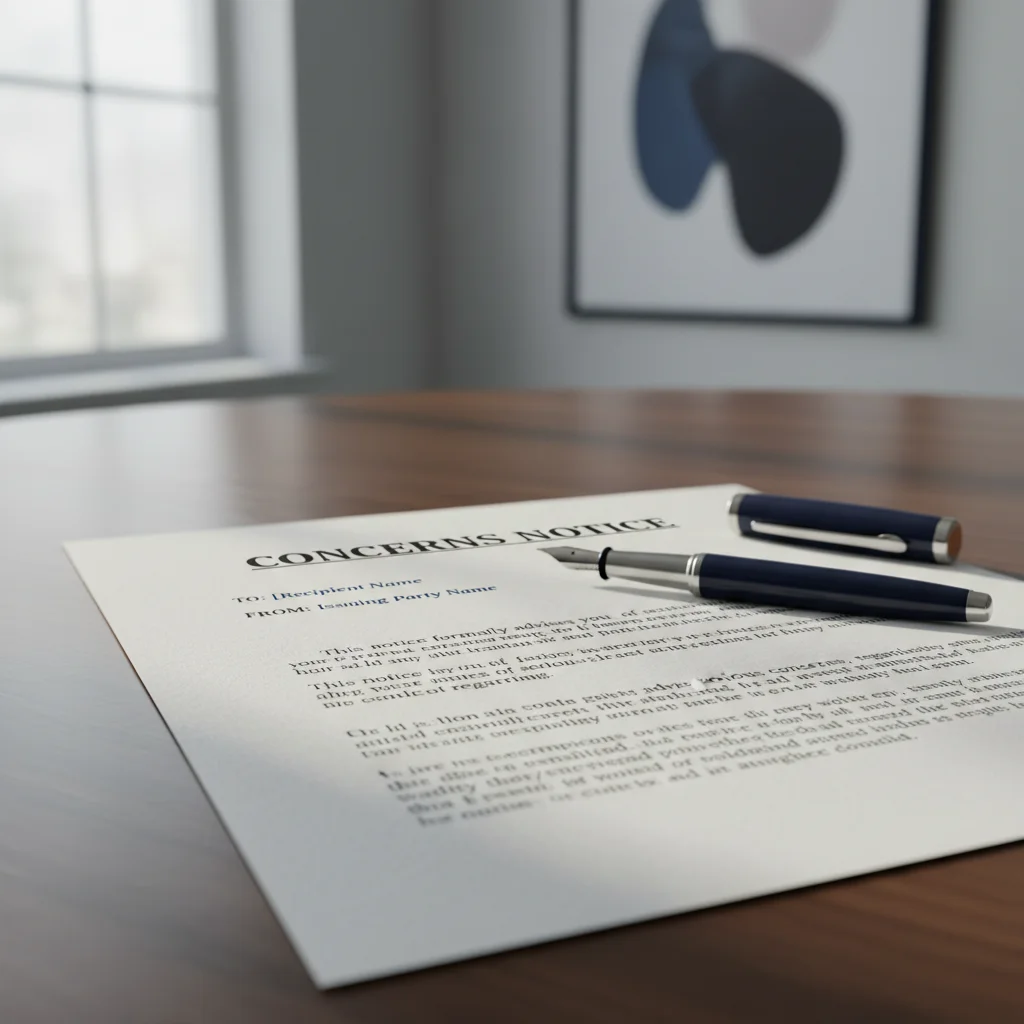
A printed concerns notice and a fountain pen on a desk

Send a concerns notice

The Victorian Act requires the notice to be given and the waiting period to expire before you start court proceedings. Most states, but not all, impose a similar requirement. Western Australia does not have a mandatory concerns notice. The notice must say where the post can be accessed, set out the imputations, and describe the serious harm to your reputation. You can send it by email or direct message to an address the poster has indicated. The poster then has 28 days to respond. Our firm drafts concerns notices for a typical fee of $990. The notice may lead to an offer to make amends, including removal of the post.

A person signs a document at a desk

Find an anonymous poster

If the poster used a fake profile, you may need preliminary discovery. Under court rules you can apply for an order to identify the poster or to find a physical or digital address. The court must consider privacy, safety, and other public interest considerations. This is a court application for the purpose of identification or service. Outcomes are not assured. The process is technical and requires legal advice. Our page on finding out who is behind an anonymous post explains the detail. We can assist with the application if your case supports it.

A woman reads an official letter taken from an envelope

Watch the defamation limit

In Victoria you have one year from the date the post was first uploaded. In Victoria, a concerns notice given in the last 56 days before the one-year period ends extends the period to 56 days after the notice is given. A court may extend the period up to three years if that is just and reasonable. Other states have their own limitation laws. Do not wait. Once the year passes, your claim may be lost. Keep track of the upload date. Capture the date in your evidence. If you are close to the limit, get advice immediately. The page on defamation time limits has more.

Legal answers for Facebook group defamation

Defamation law protects a person's reputation from harm caused by publication to a third person. A Facebook group post or comment is published to the group's members. This page covers defamation in Facebook groups, not social media generally. For social media generally, see Facebook defamation more generally.

Is a post in a private Facebook group defamation?

Yes. A private or closed Facebook group is still a publication to every member who can see it. The post need not be visible to the public. What matters is that a third person, not just the person defamed and the poster, could read it. A small group of your local customers may cause more harm than a large general group. If a member takes a screenshot and sends it outside the group, that person makes a new publication. That sharing is separate from your own evidence preservation. Keep your own screenshots of the post. The law does not require the group to be public.

Serious harm under section 10A of the Victorian Defamation Act is an element in every state and territory except Western Australia. In the NT the serious harm element has applied since 11 August 2025. The judge decides whether the post caused or is likely to cause serious harm to your reputation. In a private group, group size and whether members know you are practical evidence that may be relevant to harm. A post in a closed school parents group can be very damaging. The same words in an unrelated private group may not be. Gather the member list if visible, or at least the member count.

How to handle defamation in a Facebook group?

Your first step is to save evidence. Then report the post to Facebook. Then send a written complaint to the group admin. In most Australian jurisdictions, this starts a seven day window for the admin. You should also send a concerns notice to the poster. That notice must identify the post, set out the imputations, and describe the serious harm. See how to send a concerns notice. Before you file in Victoria, the concerns notice must be given and the applicable waiting period must expire. Most Australian states also require a notice, though Western Australia does not.

If the poster is anonymous, you may need preliminary discovery. Court rules let you ask the court for an order to identify the person or find an address. The court will consider privacy and safety factors. This is not automatic. See finding out who is behind an anonymous post. Watch the one year limit for defamation in Victoria. Serving a concerns notice in the last 56 days can extend the limitation period. For full details, see defamation time limits.

Can a Facebook group admin be sued for defamation?

Yes. A group admin can be a publisher of members' posts and should assume that risk. In Voller, the High Court decided that media companies with public Facebook pages were publishers of third party comments. That decision concerned a public page and decided publication only. It did not decide the position of a Facebook group admin or any defence. Victoria and several other states now have a defence for digital intermediaries. Under section 31A of the Defamation Act 2005, the admin must prove the elements. The defence applies only if the cause of action accrued after the commencement date. In Victoria that date is 11 September 2024. Older posts are governed by the previous law.

This defence applies only if the admin did not create the content. An admin who writes, edits, or endorses a defamatory post is not a digital intermediary. Simple moderation does not lose the defence. Removing spam or rule breaking posts is fine. Malice in establishing or providing the service defeats the defence. The admin also loses the defence by failing to have a complaints mechanism at the time of the post. Failure to take reasonable access prevention steps after a written complaint also defeats it. Publishing a clear complaints contact, such as an email or direct message address, is essential. Read more about new protections for page and group admins.

Not every state has this defence. Western Australia has no section 31A. South Australia has no section 31A either, though it has court orders against non party intermediaries. In those states, admins rely on older defences such as innocent dissemination. If you run a group and receive a complaint, seek advice promptly.

Are Facebook group admins liable for comments?

An admin can be liable if a member posts a defamatory comment and the admin does not use the statutory defence. The law looks at whether the admin provided the forum. Under the defence, the admin needs an accessible complaints mechanism at the time of the post. If a member sends a written complaint, the admin may need to take reasonable access prevention steps before the complaint or within seven days after it. This is a condition of the defence, not a legal duty. Asking the poster to remove it may also count. A concerns notice that includes the required information can serve as a complaint.

If no complaint is made, the admin only needs to show they had a complaints mechanism. The defence is not available for an admin who edited the comment. If you are an admin, avoid editing members' posts to change their meaning. Remove or hide the whole post instead. If you receive a concerns notice, the 28 day offer to make amends period applies. You can offer to take the post down. For more on defending a claim, see defending a defamation claim.

After judgment or an injunction, a court can order a non-party digital intermediary, such as an admin or Facebook, to take access prevention steps. Under Victorian law, section 39A permits this even when the intermediary is not liable. This power exists in every state and territory except Western Australia. The intermediary must be heard first, except for urgent temporary orders.


Common questions about Facebook group defamation

Yes. A group comment is published to every member who can read it. You need to show the comment identifies you, has a defamatory meaning, and caused or is likely to cause serious harm to your reputation. You must usually send a concerns notice before starting proceedings. The notice must identify the comment and set out the imputations. The poster has 28 days to respond. You have one year from the date the comment was first uploaded in Victoria. A lawyer can help you draft the notice and assess your claim.

Start by reporting the post to Facebook using its defamation reporting form. In most Australian states, a written complaint to the group admin starts a seven day window for the admin to take access prevention steps. You can also send a concerns notice to the poster. Removal is not assured by Facebook, the admin or a court. If the post remains, you may need legal advice about court options.

Yes. A group admin may be treated as a publisher of what members post. The Voller case decided publication for public Facebook pages only and did not decide defences. Victoria and several other states have a defence for digital intermediaries, but the admin must prove it. Western Australia and South Australia do not have the section 31A defence. Admins there rely on older defences such as innocent dissemination. If an admin writes, edits or endorses the post, they are not a digital intermediary.

An admin can be liable if a member posts a defamatory comment and the section 31A defence is not available or not made out. The admin needs an accessible complaints mechanism, such as an email or direct message address, at the time of the post. After a written complaint, taking access prevention steps within seven days is a condition of the defence, not a legal duty. An admin who writes, edits or endorses the comment loses the defence. Western Australia and South Australia do not have this defence.

Yes. A private or closed Facebook group still publishes the post to every member who can read it. The post does not have to be visible to the public. The test is whether a third person could see it. Practical evidence about group size and whether members know you may be relevant to serious harm. If a member screenshots the post and sends it outside the group, that person makes a new publication. Keep your own screenshots as evidence, separate from any sharing by others.

Save evidence first. Take screenshots of the post, the group name, the date, the poster's profile, and the member count. Do not reply. Report the post to Facebook. Send a written complaint to the group admin, including your name, the post, and your view that it is defamatory. Then send a concerns notice to the poster. Watch the one year time limit. If the poster is anonymous, apply for preliminary discovery. A lawyer can guide you through these steps.

Yes, if the shared post is defamatory. Sharing a post outside the group communicates the matter to a new audience, which is a new publication. You become a publisher of the content you share. A person who takes a screenshot and sends it outside the group does the same. The original poster may also remain liable. You should seek legal advice about your position. The law on defences for sharing is fact specific.

Start by collecting all available evidence. If the poster used a fake profile, you may apply to a court for preliminary discovery. Court rules can allow an order to identify the poster or find a physical or digital address. The court weighs privacy and safety before making an order. This is a court application, not a guarantee that you will learn the person's identity. A lawyer can prepare the application and advise whether it is appropriate in your case.

A corporation can sue only if it is an excluded corporation. That means a not for profit or a business with fewer than 10 employees and not associated with another corporation. An excluded corporation must also show serious financial loss. A person named personally in a group post keeps their own claim even if the business is also mentioned. This matters for business-warning groups. If you are an owner named in a post, get advice.

No. eSafety does not deal with purely reputational damage. It handles adult cyber abuse and cyberbullying of children. For adult cyber abuse, the content must be targeted, intended to cause serious harm, and menacing, harassing, or offensive. Report the post to Facebook first. If your child is the target, eSafety's cyberbullying scheme may apply. For defamation, use a concerns notice and court proceedings.

Need advice on defamation in a Facebook group?

Call Sutton Laurence King Lawyers on 03 9070 9810. We act for people defamed in groups and group admins across Australia.

Call